Hotpot
There are a great many variations of hotpot in China, both in ingredients and presentation. There are also variations in other Asian countries, under different names: “chafing dish”, “steamboat”, etc.
It is usually eaten in restaurants, as it requires a lot of preparation, and is better eaten in groups of people, because of the greater variety of meats and vegetables, and dips, that can be included. It is ideal winter food in good company.
Hotpot restaurants
These are very popular throughout mainland China, though styles vary from Mongolian to Szechuan. There are different setups in hotpot restaurants. Some have tables with holes in the centre, where the barbecue sits. Some use electric induction cookers, others use blocks of fuel, which are set afire and sit under a stand, which in turn holds the pot (this is the way with places that give each diner a personal pot), but the traditional hotpot is a special thing, also known as a ‘chafing dish’, which uses charcoal, or even coal, which is piled and lit in the central column, while the food cooks in a broth in the ring around it.

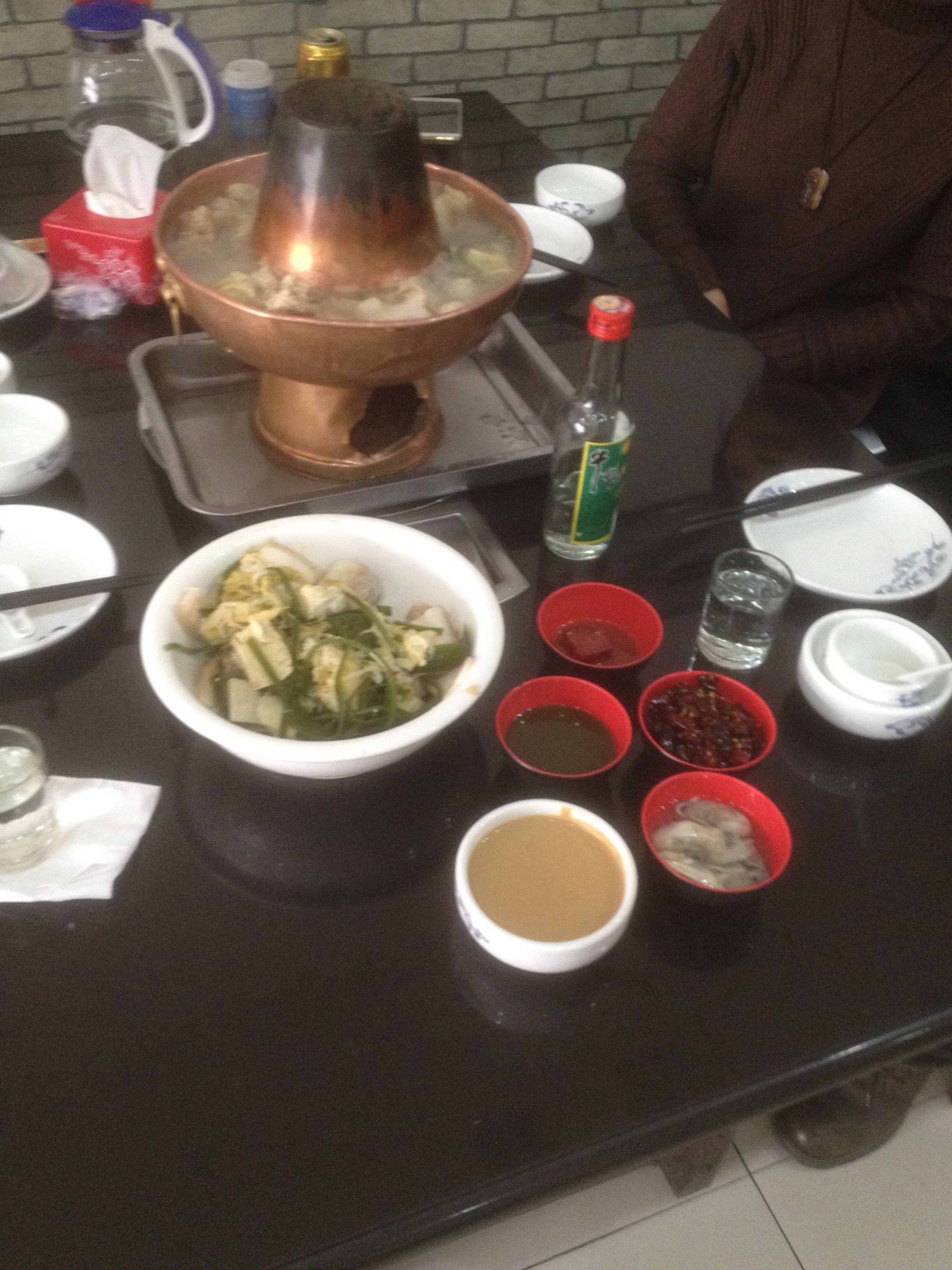

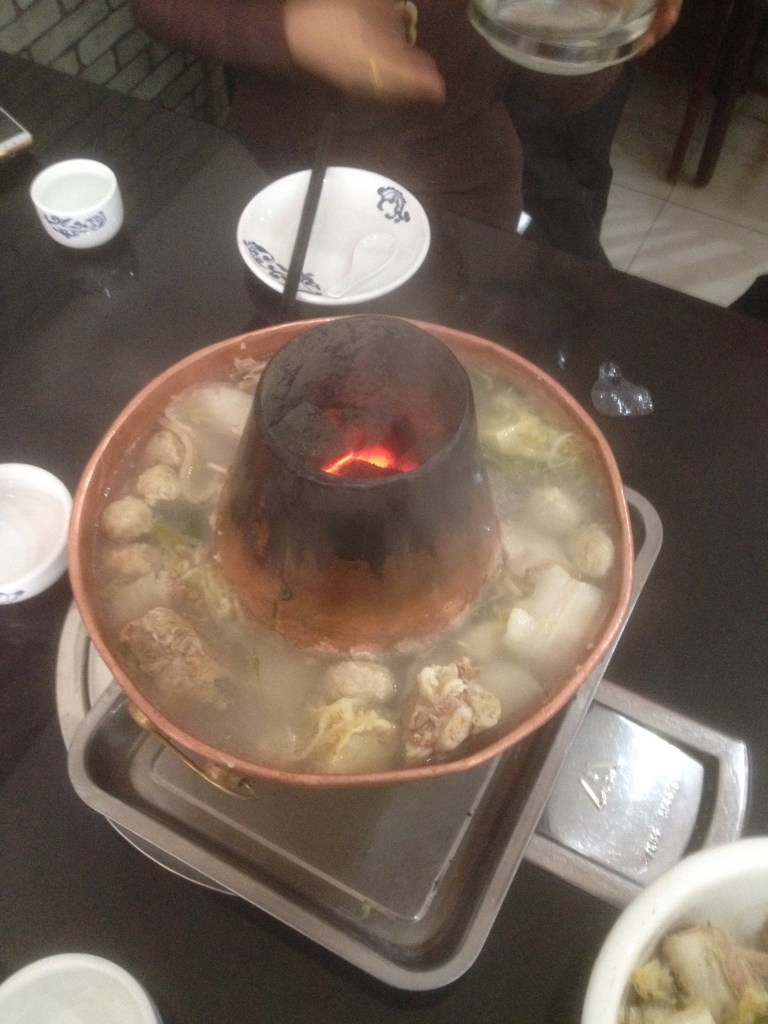


It is also possible to order side dishes, e.g. salads, to accompany the main event. Beer or Baijiu helps to wash it all down. Baijiu is often called “white wine”, but is actually a clear spirit from ca. 35-70% alcohol (the Beijing-style variety, known as “Erguotou” is around 50% alcohol). Generally speaking, the further north in China, the stronger the Baijiu. A more accurate translation would therefore be “white hooch”).
For a table-top hotpot, especially using an induction cooker, especially at home, there is also a special ‘ying-yang’ style dish, allowing for two different broths, generally one spicy – with chillies and Sichuan pepper – and the other simply a basic broth (usually made from chicken and pork bones), though wolfberries (goji berries) and jujubes (“Chinese red dates”) might be added.


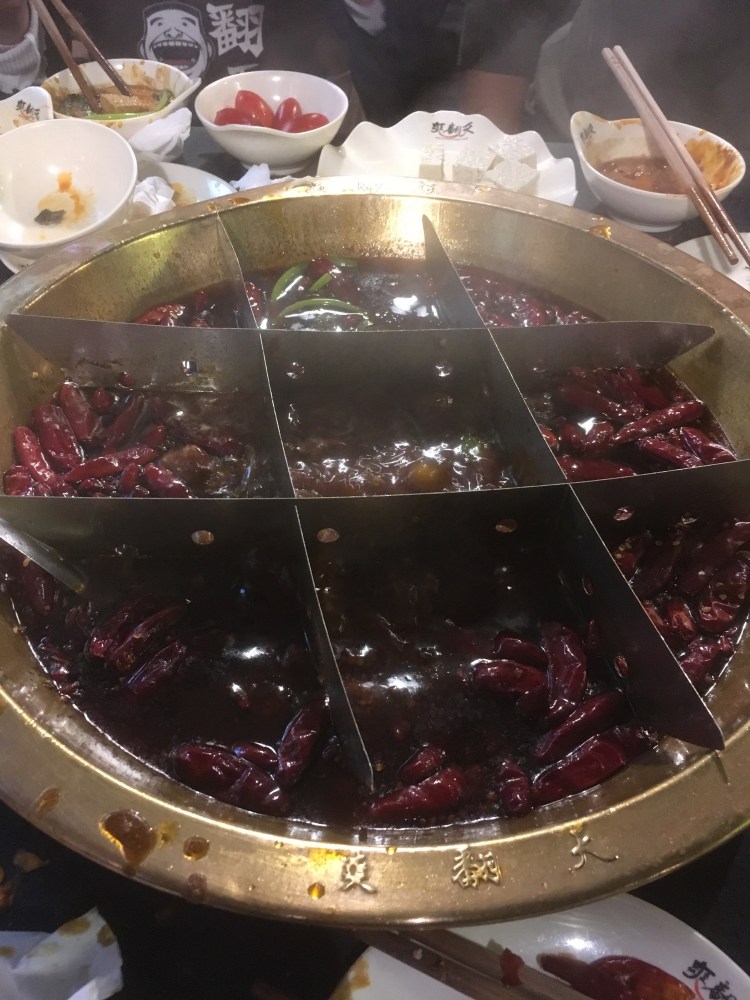
The spicy broth for hotpot can be fiercely hot, especially in Szechuan. In fact Chongqing hotpot is famously the hottest and a bit extreme for Western taste (and even for many Chinese). I like spicy food, but the one below – which was not the hottest on the menu of a branch of a Chongqing-based chain in Qinhuangdao – was almost inedible for me (I didn’t have much).

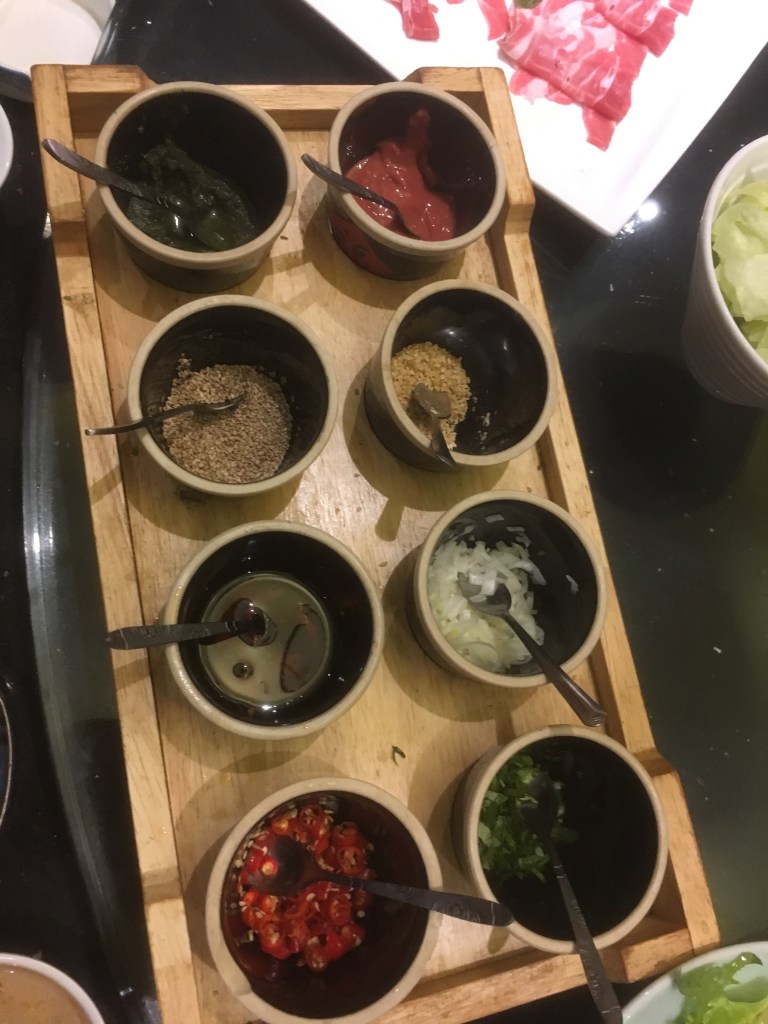
In most places, a sesame-paste dip (to which other things, e.g crushed garlic, chopped coriander, fermented tofu, crushed peanuts, chopped red or green chillies, and more, can be added) is the main accompaniment, but in Szechuan, many people like a simple dip of oil infused with Szechuan pepper.

There is more about hotpot (including more examples of ingredients and directions for making it at home) under Recipes on the Chinese Food page, or just follow this link.

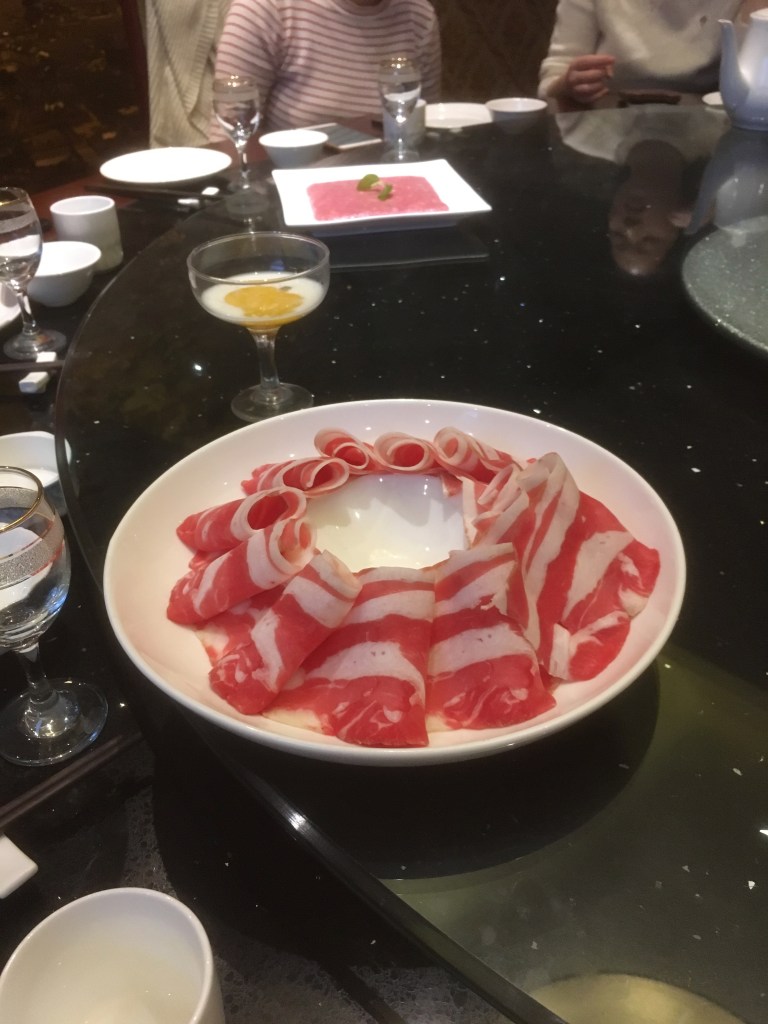

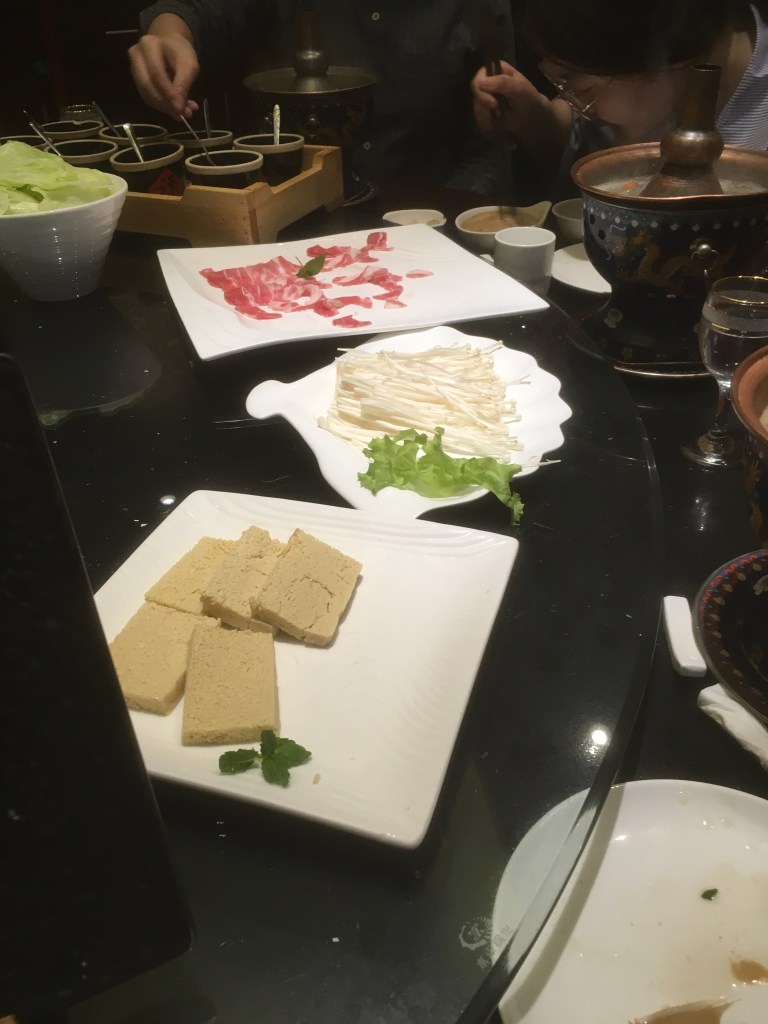
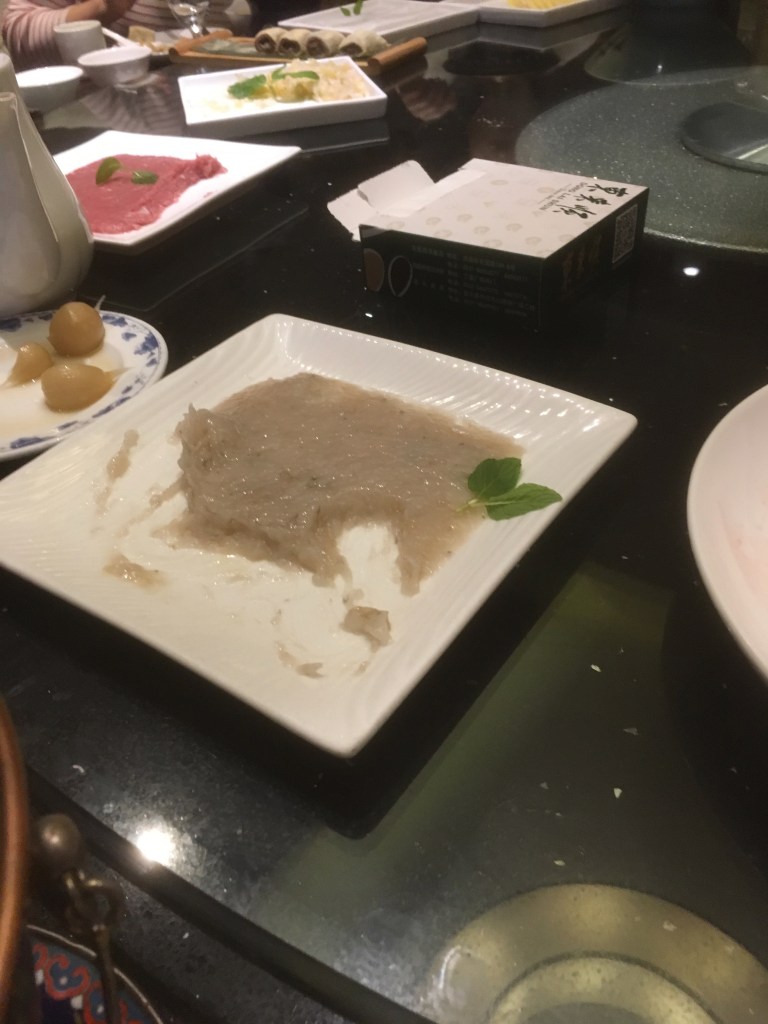
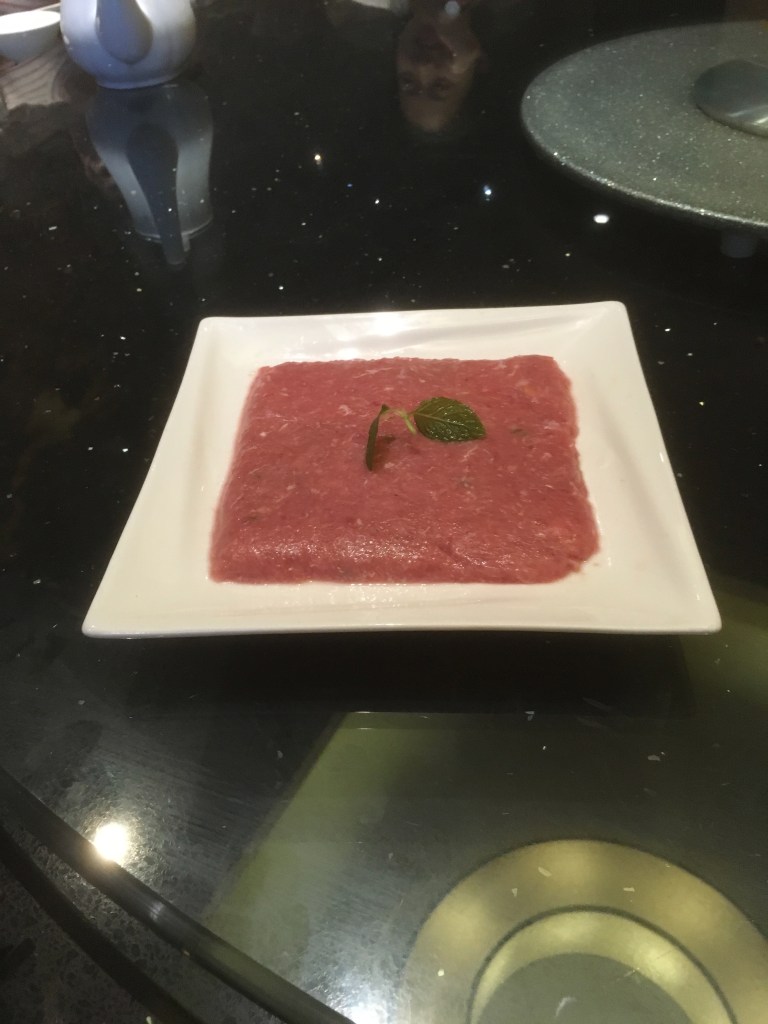
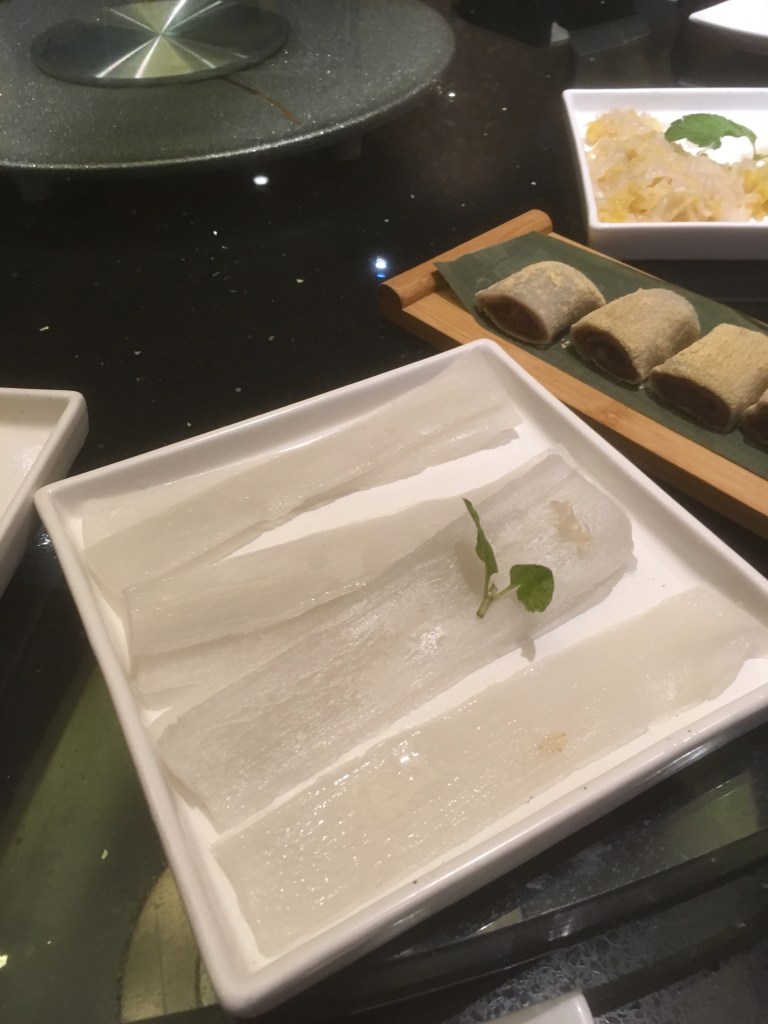
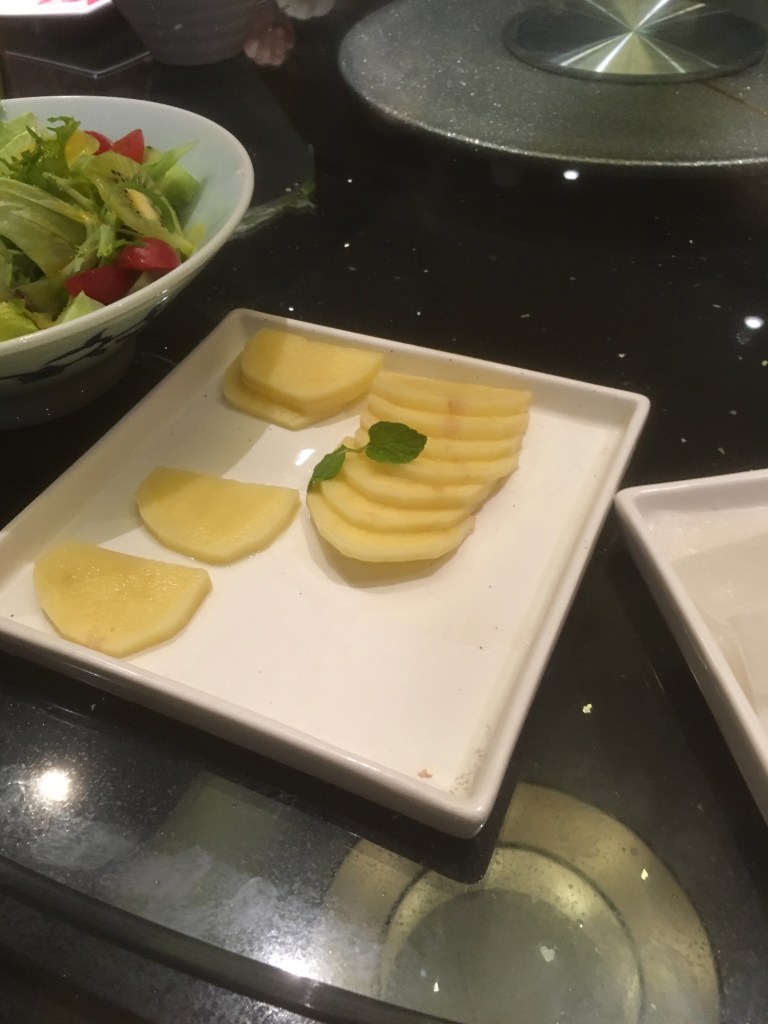
For Hotpot, the diners create their own meat- and fish-balls by spooning the raw material into the boiling broth
Mala Tang and Mala Xiangguo
“Mala” is the combination of flavours (“numbing” and “hot”) found in Sichuan cooking, a mixture of Sichuan pepper(s) and chilli. This is the iconic flavour of Sichuan, but is extremely popular in restaurants all over China. These two “dishes” can also be found in the food halls of shopping malls and department stores.
The difference between Mala Tang and Mala Xiangguo is that the first is a soup (汤 (Tāng)), and the second is “dry-cooked” in spiced oil (literally Xiangguo means something like “aromatic pot”). The latter was new and very trendy in Beijing while I was in China. Both are served in specialist restaurants – some do both, but usually only one or the other. The principle is the same: the customer selects items from a buffet of ingredients and then the ingredients are cooked and either collected from a counter by the customer or brought to the table. This is different from a hotpot restaurant, where customers usually order from a menu with tickboxes for what they want, handing the menu to a waiter or waitress.
The advantage of these dishes over hotpot is that each customer can choose their own ingredients, or share with just one or two other people – so they are more suitable for solo diners or smaller groups.
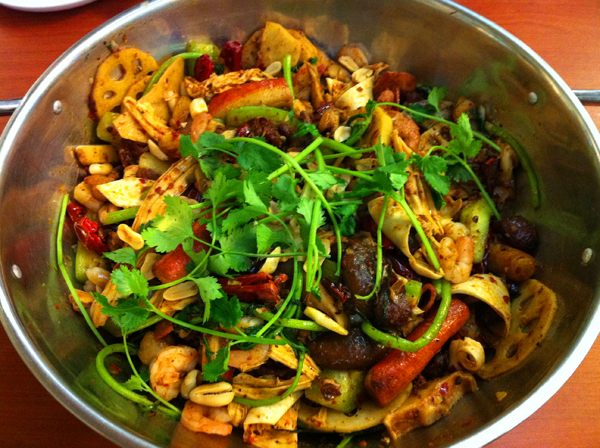
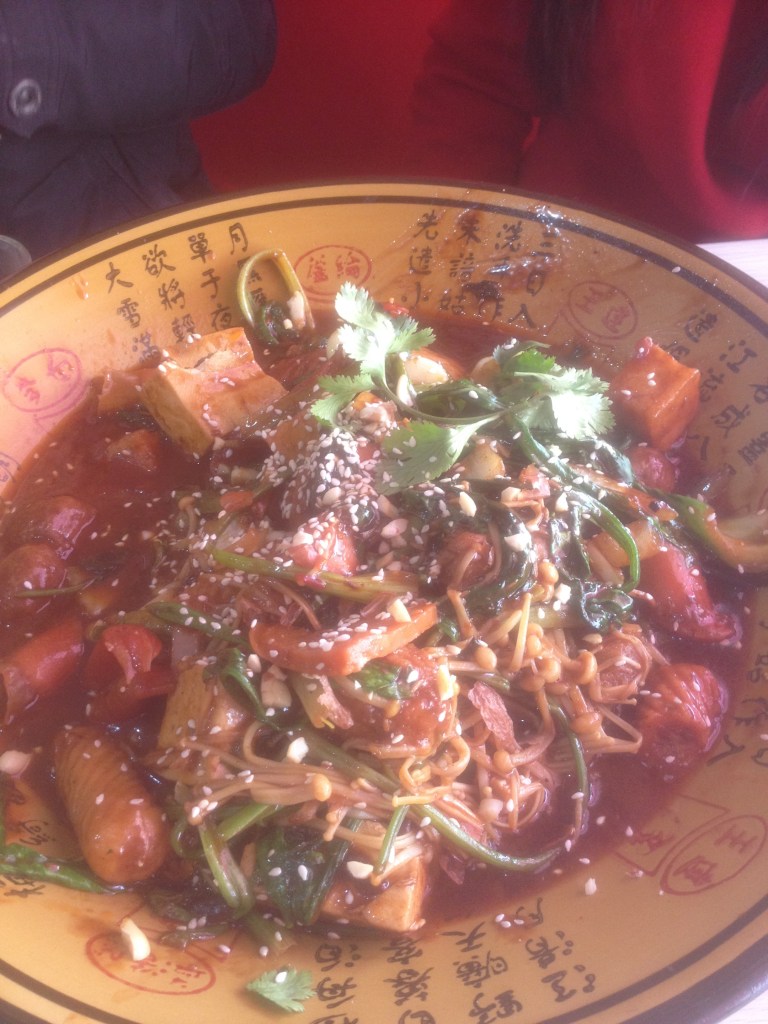
A typical Malatang restaurant in Jinan (where there were several, very popular with students):
The customer picks up a bowl on entering and puts his or her selected ingredients into it, using tongs, from a buffet including salad greens, spinach, assorted kinds of cabbage, fresh coriander, lotus root, various kinds of mushroom (straw, chestnut, oyster, and more), noodles (thick or thin; rice, egg, bean, buckwheat, or plain), tofu (slices of brick tofu, fried tofu, frozen tofu), fish and seafood, fish balls, meat balls, various kinds of sausage, raw and cooked beef, lamb, pork, and chicken, chicken or duck blood jelly, etc etc etc.
Then the customer takes the bowl to the counter, where the customer states their preference for “La”, “Wei la”, or even “Bu la” (hot, medium hot, or not hot).
The bowl is weighed and paid for, before being passed into the kitchen. Rice is an optional accompniment (I usually skipped it).
The customer is then given a token with a number on it, collects a small eating bowl (if desired), chopsticks, and a spoon, and sits down at a table (if one is free! – these places can be busy).
In the kitchen, the ingredients are tipped into a mesh ladle, which is in turn placed into a large pot of broth and cooked. When cooked, the ingredients are then put into a large serving bowl of appropriately-spiced broth.
For Mala Xiangguo, the ingredients are stir-fried in spices (typically including, but not limited to, Sichuan pepper, dried red chilllies, star anise, fresh slices of garlic and ginger) and oil before being placed into a similarly large serving bowl.A display shows the customer when their food is ready for collection – or, in posh places, a waiter may even bring the bowl (and rice, if ordered) to the customer’s table.
A solo diner may eat direct from the serving bowl or, more politely, will transfer portions into the eating bowl before eating. If the serving bowl is shared, eating bowls are used by the diners.
Malaxiangguo at home
Although complicated, it is possible to make Malaxiangguo at home – but the quantities are necessarily large.
Ingredients
For the vegetables:
3 celery stalks (thinly sliced)
2 carrots (thinly sliced)
2 potatoes (sliced)
2 cups rehydrated wood-ear mushrooms (rinsed and drained)
3 long pieces of rehydrated tofu bean threads (Fǔzhú, drained)
4-6 shiitake (rehydrated if using the dried variety, washed and sliced)
a handful of sliced lotus root
For the spice-infused oil:
1/3 cup oil (80 ml)
3 star anise
2 tablespoons Sichuan peppercorns
1 tablespoon fennel seeds
1 black cardamom
1 cinnamon stick
3 bay leaves
1 whole nutmeg
1 large piece dried orange peel
2 pieces dried ginger (or 5 slices of fresh ginger)
1/4 cup dried red chili peppers (keep them whole
For the rest of the dish:
2 tablespoons fermented chilli-bean sauce
2 tablespoons hot pot soup base (available from good Asian supermarkets)
6 slices ginger
8 cloves garlic (smashed)
3 shallots (sliced)
1 cup dried red chili peppers (keep them whole)
3 spring onions (chopped)
1/4 head cabbage (sliced)
7 oz. pack fish balls (200g, optional)
2 tablespoons Shaoxing wine
1 tablespoon sugar
Salt to taste
a handful of chopped coriander
Instructions
To prepare the vegetables:
First, bring a pot of water to a boil, and blanch all the vegetables until almost cooked (potatoes and carrots will take slightly longer), then transfer to an ice bath. Drain thoroughly and set aside.
To make the spice-infused oil:
Heat the oil in a wok over low heat, add all the spices, and let them infuse for 20 minutes, until all the spices start to brown. Turn off the heat, and use a slotted spoon to scoop out all of the spices, keep the oil in the wok.
To assemble the dish:
Turn the heat back on low to medium, add in the hot bean sauce, hot pot soup base, ginger, garlic, and shallots. Cook for a couple of minutes until the oil turns red, taking care not to burn the sauce.
Add in the dried chili peppers, spring onions, and cabbage. Stir and mix everything for 2 minutes.
Stir in the fish balls and all the blanched vegetables, adding in the Shaoxing rice wine and sugar. Stir-fry and mix everything well for two minutes.
Salt to taste.
Transfer to a serving plate (or serve direct from the wok), and sprinkle with chopped coriander.
Serve with plenty of steamed rice (or not) and bottles of beer.
 Personal homesite