It’s really not difficult to make Chinese dumplings, but you can’t just make a few. A minimum quantity would be about 40 at one time. The name jiaozi is generic, although jiaozi might be referred to as shui jiao, if boiled; zheng jiao, if steamed; and guo tie or jian jiao, if fried. These last are what are sometimes known as potstickers.
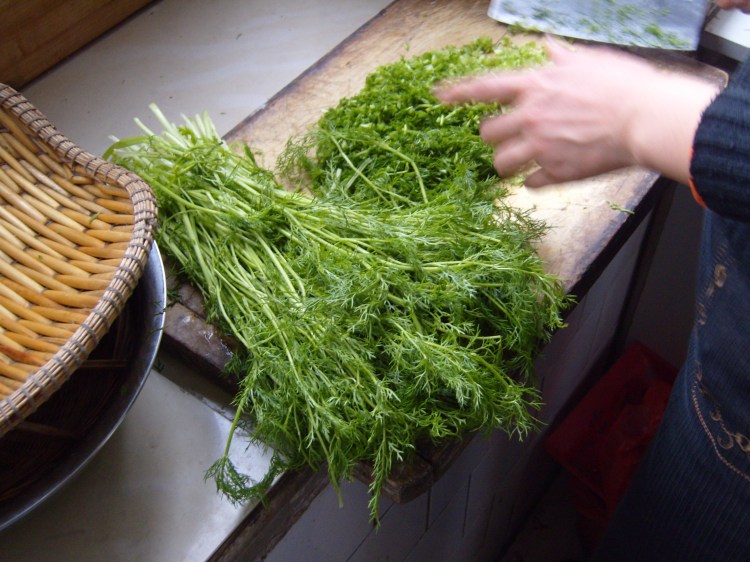
The example here is for pork and fennel jiaozi (as made by my head of department and her daughter in Qinhuangdao).
First chop the ingredients (vegetables and meat) finely, and add salt (actually quite necessary – without salt, they can be rather tasteless), some soy sauce, and any spices you may like.

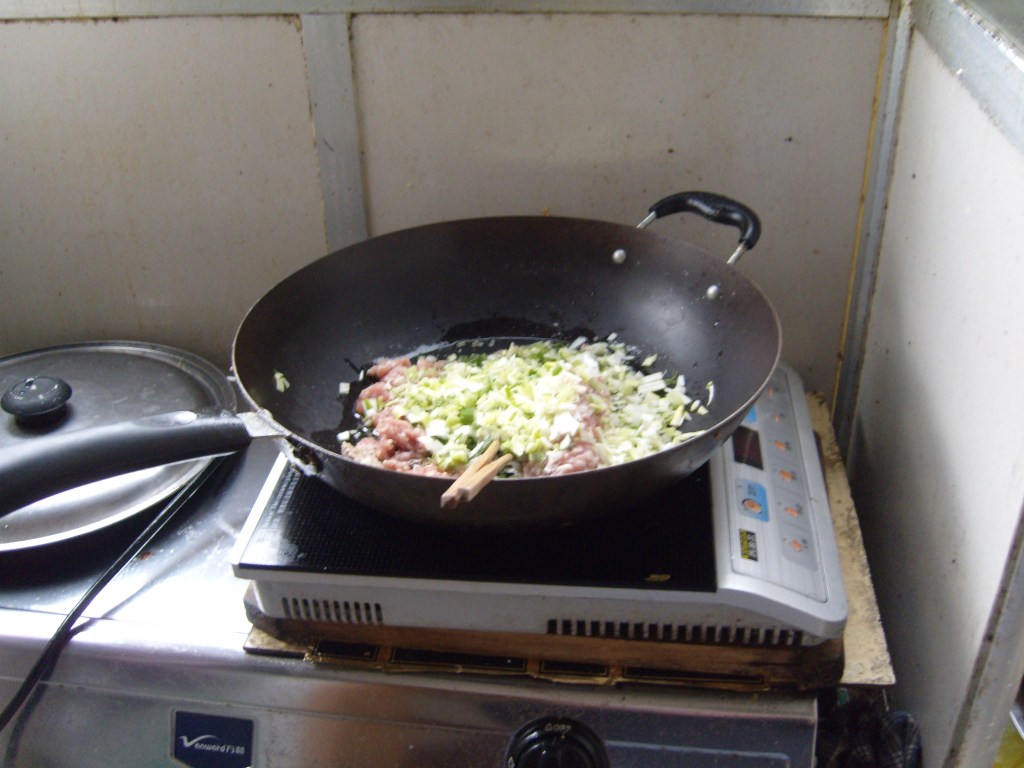
Note that not everyone cooks the filling, but if you’re happier doing so then stir-fry the spring onion and pork.
Add the chopped fennel to the spring onion and pork and cook until softened.
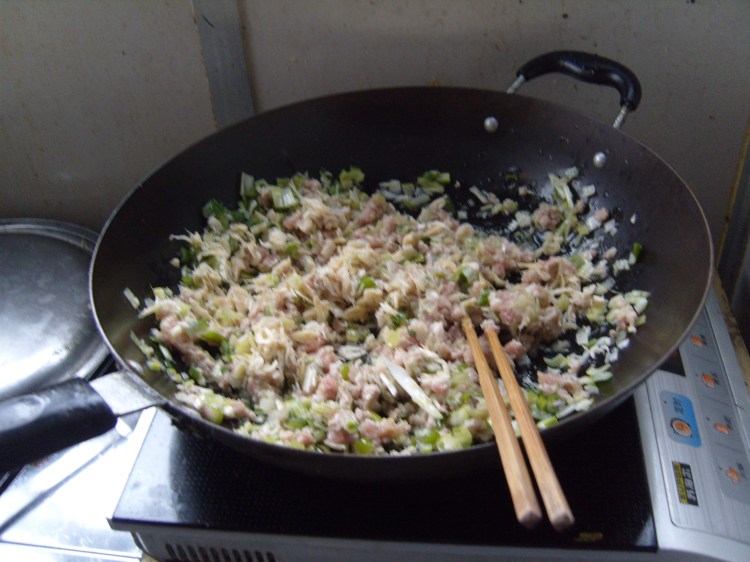
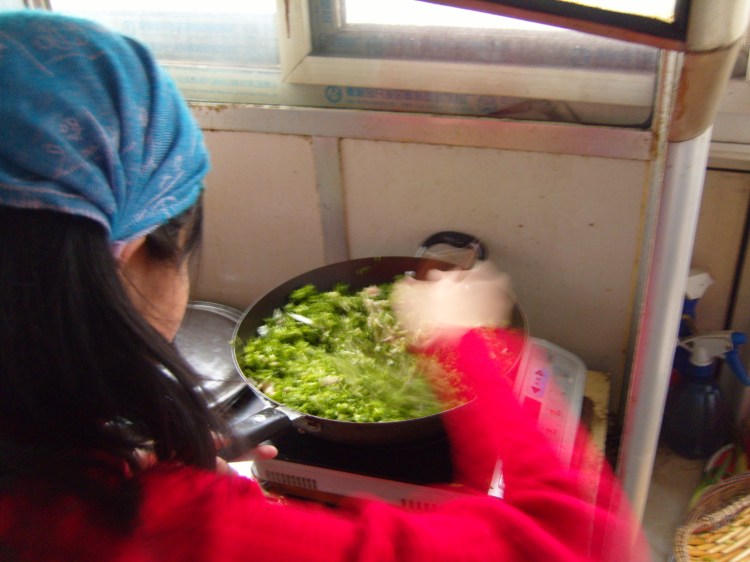
Allow the filling to cool while you make the dough.
For the Jiaozi Dough:
3 cups fine plain flour, more for dusting
1/4 teaspoon salt
1 1/4 cups cold water
Place the flour in a bowl and stir in the salt. Slowly stir in the cold water, adding only as much as is necessary to form a smooth dough.
Place the dough on a flat surface and knead into a smooth ball.
Cover the dough and let it rest for at least 30 minutes.
While the dough is resting, prepare the filling (if you haven’t cooked it).

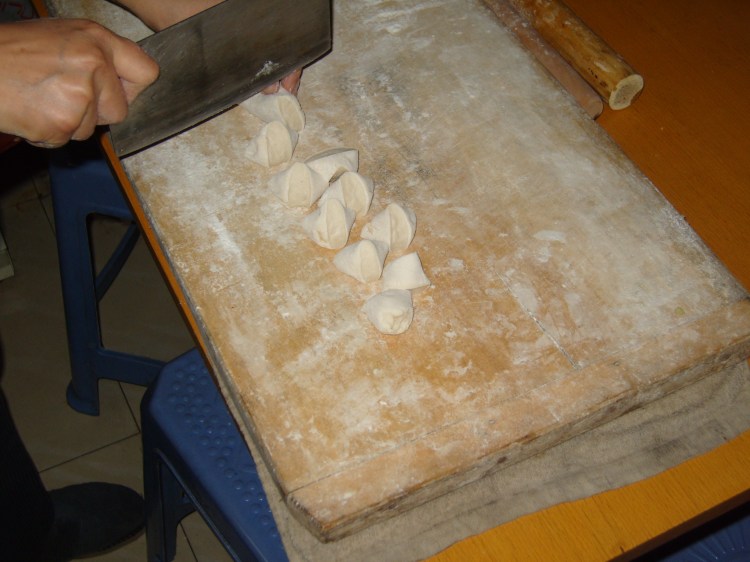
Roll the dough into a long cigar-shape, then cut diagonally, and roll out into small thin pancakes about the size of your palm (or smaller), lightly flouring the surface as needed to keep the dough from sticking..
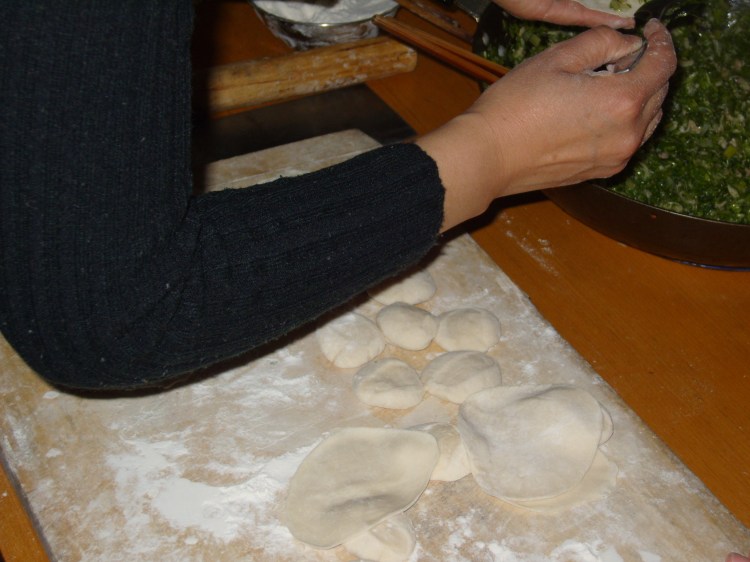
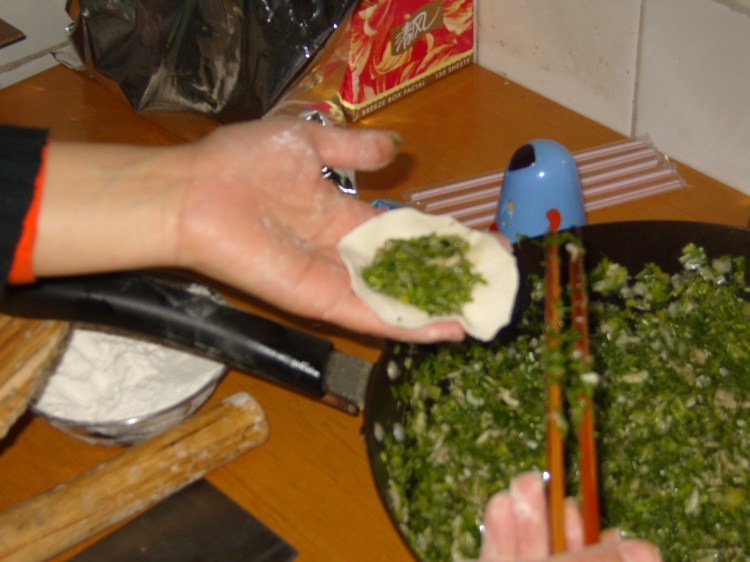
Add the filling, moisten the edge, and fold over, pressing to seal. Make sure the jiaozi do not dry out too much – prepared ones can be covered with a moist towel while you finish the job.

They can be boiled, steamed, or fried (leftover boiled or steamed dumplings can be fried the next day, if kept overnight in the fridge).
To boil: bring a large pot of water to a boil. Add half the dumplings, giving them a gentle stir so they don’t stick together. Once the water returns to a boil, add 1/2 cup of cold water and cover the pot. Once the water returns to a boil, add another 1/2 cup of cold water and cover.
When the water comes to a boil again, the dumplings should be fully cooked and ready to be removed from the pot and drained. You can cut open a test dumpling just to make sure.
To steam: place in a single layer in a steamer for about 5 minutes. Test one to make sure it’s cooked through.
To fry: Cover the bottom of a frying-pan with a thin layer of oil, heat and then add the dumplings in a single layer. They should sizzle, at which point add a half-cup of water and cover. Cook for about 5 minutes. The bottom should be nicely browned and the dumpling cooked. Test one to make sure it’s cooked through. This is also how leftover dumplings should be cooked.
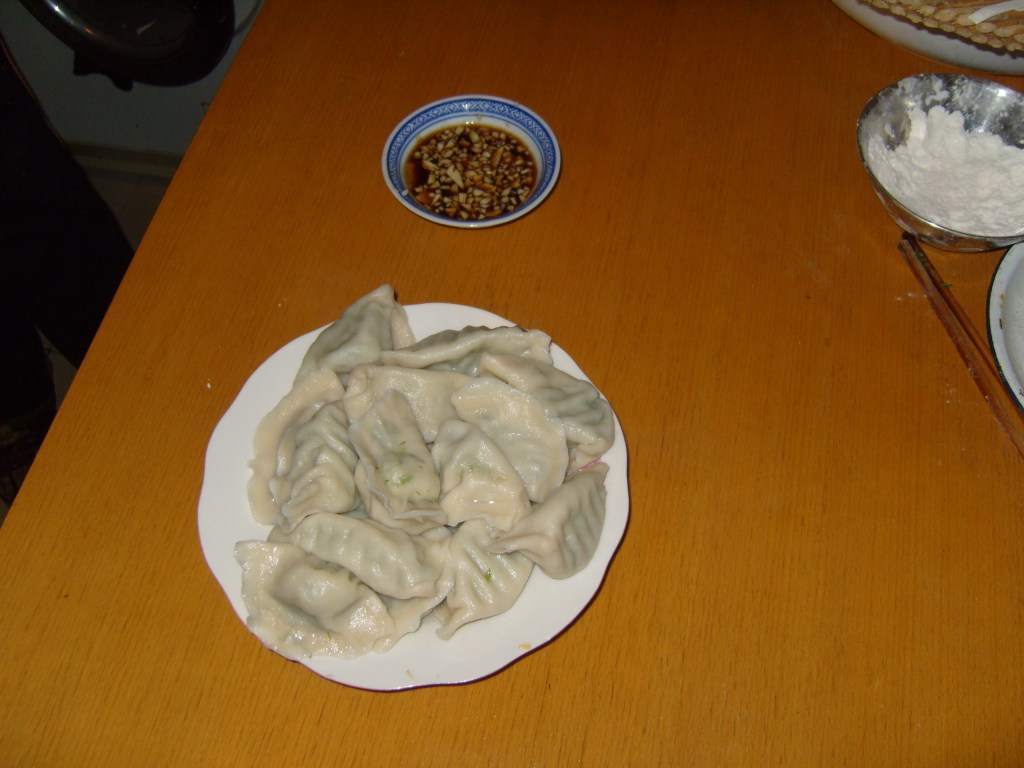
The dip here is a simple mixture of soy sauce, black vinegar, and chopped garlic. These are the standard condiments in a dumpling restaurant (although you may be lucky and find some Beijing-style pickled whole garlic).
Alternative fillings
With pork: chopped shitake mushroom, Chinese cabbage, any other vegetable: carrot, spinach etc.
With chicken: not very common, but as for pork
With beef: as for pork, but chopped tomato (no juice – or it will be too moist) is popular
With lamb: As for pork.
With donkey-meat: As for pork.
Vegetarian: As for pork, without the meat, of course. Great favourites are chopped tomato (no juice – or it will be too moist) with chopped (or mashed) scrambled egg, and egg with (Chinese) chives.
 Personal homesite