Sichuan pepper is also known as Chinese prickly ash, dehydrated prickly ash, Chinese pepper, rattan pepper (for the green variety), mala pepper, etc. In reality, it’s neither a pepper nor a chilli, but is the dried berry of a type of spiky shrub native to regions of Western China, a plant of the genus Zanthoxylum in the family Rutaceae (which includes citrus and rue).
It has a citrusy aroma with hints of pine, and produces a tingly, numbing sensation (a bit like touching your tongue to a low-voltage battery).
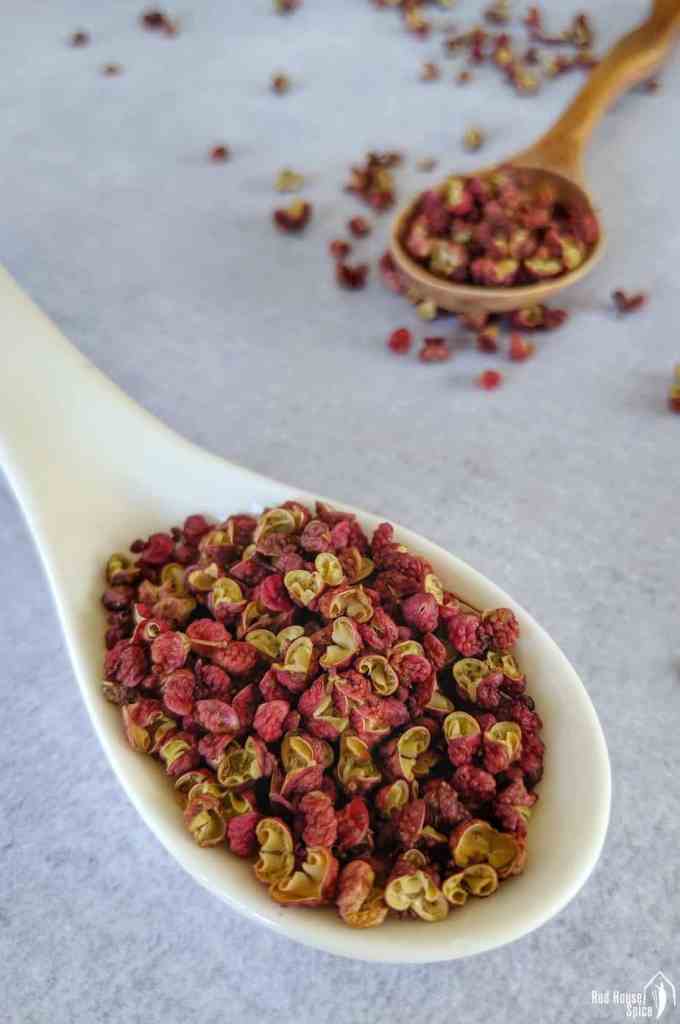
The Chinese name for the red/pink variety is 花椒 (Huā Jiāo) or 红花椒 (hónghuājiāo/ red Sichuan peppercorns), harvested from Zanthoxylum bungeanum. It is usually dried and sold either whole or ground. The small black seeds inside the peppercorns are discarded, as they add nothing to the aroma or taste. It is part of “five-spice powder”. It is stronger tasting than the green variety.
The green variety, introduced sometime in the 1990s, 麻椒 (Má Jiāo) or 青花椒 (qīnghuājiāo/green Sichuan peppercorns), is harvested from Zanthoxylum armatum. It is also known by the name 藤椒 (téngjiāo/rattan pepper).

The green variety is richer in scent, and has a very strong citrus smell but not much of a pine note. It also delivers a distinctive numbing sensation, but one which is slightly less intense. It can also be sold dried (again, the small black seeds are discarded), but is often used fresh (still attached to its twig) or pickled.

Sichuan pepper is also available as an oil 花椒油 (Sichuan pepper oil), used in dressings, dipping sauces, etc.
A mixture of salt and Sichuan pepper, 花椒盐 (huājiāoyán), which may be toasted and browned in a wok, is served as a condiment, usually used with white meats.
Málà/麻辣, meaning numbing and spicy, is a Chinese term describing the flavour profile created by the combination of Sichuan pepper and chilli pepper, 辣椒 (Là Jiāo), and is the iconic characteristic of Sichuan cuisine.
 Personal homesite