These are ingredients for Northern, Beijing, Sichuan, or Shandong cuisines, and not or only rarely used or found in Chinese restaurants or supermarkets in Europe, which are mainly Cantonese or Hong Kong style. However, these ingredients are becoming more available thanks mainly to the number of Chinese students now attending western universities.
See also Sichuan Pepper, which is a special case.
1 Sichuan Spicy Bean Sauce
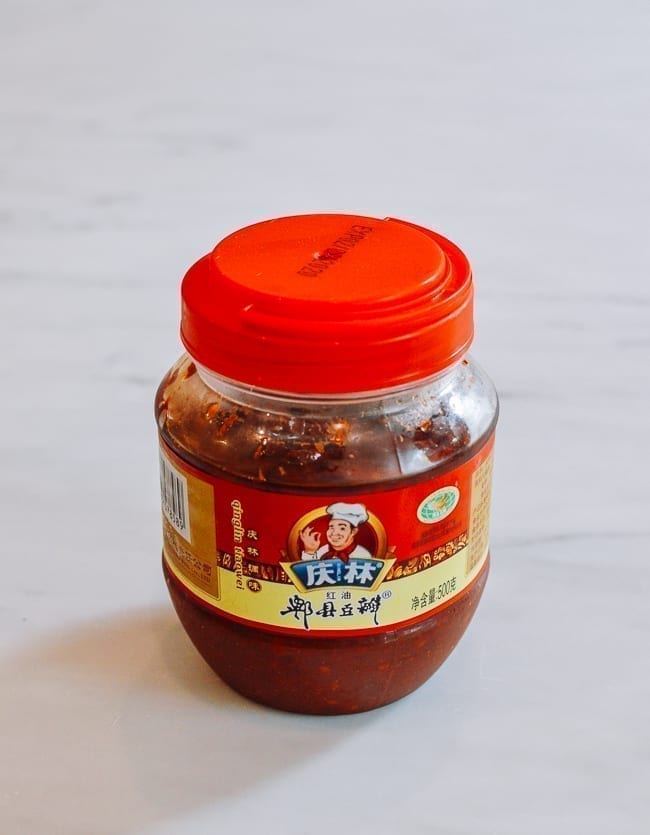

Sichuan Spicy Bean Sauce, made with chilies and fermented broad beans, is a chunky, savory, spicy, and salty sauce used in many Sichuan dishes. Píxiàn dòubàn (郫縣豆瓣) is particularly well-known, named after the district of Pixian (now called Pidu) in Chengdu, the capital city of Sichuan Province. Look for one made in this region for the best taste. Pixian doubanjiang is a protected geographic indication and is one of the few food products in China whose craftsmanship qualifies as National Intangible Cultural Heritage. Douban is used in dozens of Sichuan classics. A little of this flavor-packed paste goes a long way.
Pixian chili bean paste, or doubanjiang, is often called the soul of Sichuan cooking, as it is the deeply flavorful base of so many classic Sichuan dishes. It is a fermented mix of broad (fava) beans, er jing tiao chilies, salt, wheat flour—and, in the version below, red oil, or hong you.
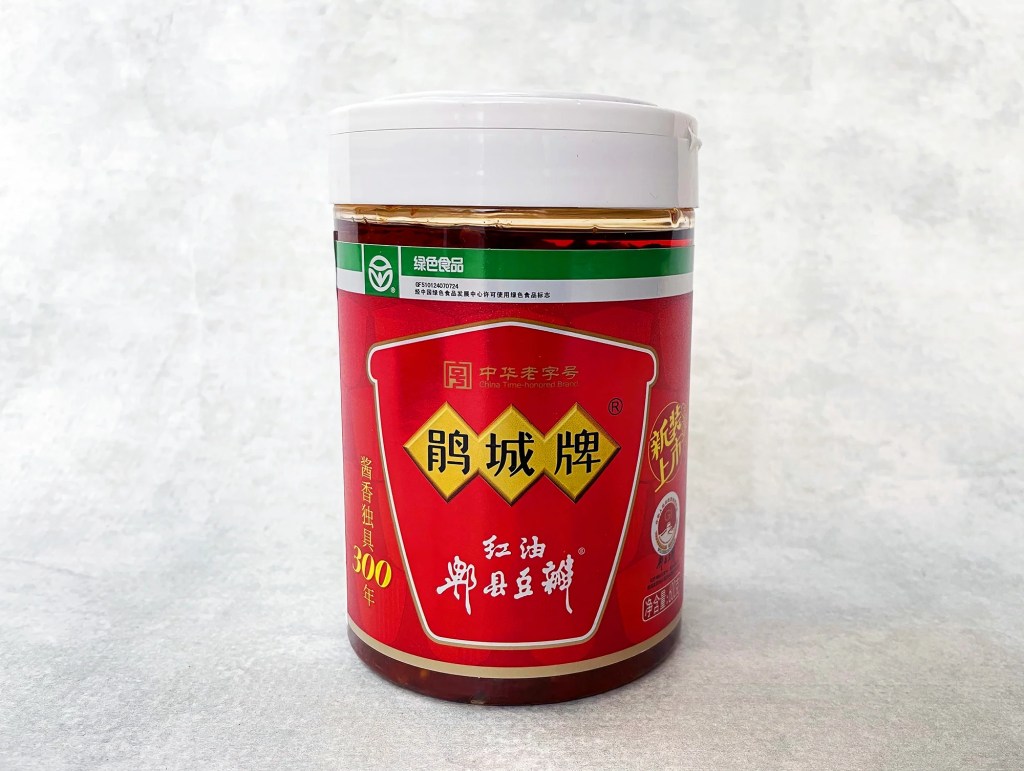
Hong you douban is the everyday, go-to doubanjiang in Sichuan, both because it is less expensive than pure, aged douban and because, being younger and having added oil, it is redder. Many chefs prefer the red color and bright flavor it brings to dishes, particularly stir-fries. They will use red-oil douban for stir-fries and the deep-brown aged douban for braises and soups. Or they may combine the two, using hong you douban for color and aged douban for depth of flavor.
Young douban is aged in long, industrial, cement pools, often for just one year; aged douban is produced in small batches in 3-foot-tall earthenware crocks with conical lids. Each day for 3 years or more those lids are removed, the doubanjiang is stirred by hand and then left to bask in the rural Sichuan sun and air, soaking in the microbes of its unique terroir.
2 Yellow bean paste
This is a fermented paste made from yellow soybeans, salt, and water. Yellow soybean paste is produced used primarily in Beijing cuisine and other cuisines of northern China. In Chinese, the full name of the condiment is huángdòu jiàng (黃豆醬; ‘yellow bean paste’), but it is commonly referred to as just huáng jiàng (“yellow paste”). There are other soybean pastes used in Japan (miso) and Korea (doenjang), and although not quite the same they could be substituted. Below are some of the more common brands available in the West.
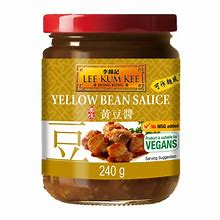
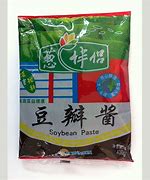
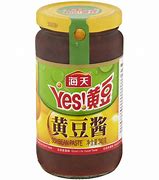
The one in the middle (in sachet form) was the most popular brand in QHD – possibly in all Northern China – while I was there. Lee Kum Kee is a Hong-Kong brand and defintely a bit sweeter. The third, Yes, is available in every supermarket in China (certainly that I personally ever entered).
Tianmianjiang – Sweet Flour Sauce
Tianmian sauce (Chinese: 甜麵醬/甜醬; pinyin: tiánmiànjiàng or tiánjiàng), also known as sweet bean sauce, sweet flour sauce or sweet wheat paste, is a thick, smooth, dark brown or black paste with either a mild, savory or sweet flavor. It is commonly used in Northern Chinese cuisine, Northeastern Chinese cuisine, as well as Korean-Chinese cuisine. Peking duck and Korean jajangmyeon are two popular dishes that feature the sauce. It is sometimes used instead of the saltier yellow-bean paste, but is not really a substitute. In Northern China, the sauce is also eaten with raw spring onions as a snack or side dish.
The Chinese word tiánmiànjiàng (甜麵醬) consists of characters meaning “sweet” (甜), “flour” (麵), and “sauce” (醬). It is also called tiánjiàng (甜醬), which means “sweet sauce”. The origin of the Korean word chunjang (춘장) is unknown. One theory is that it derived from the word cheomjang (첨장), which is the Korean reading of the Chinese characters 甛醬.
Although terms such as “sweet bean sauce” and “sweet bean paste” are used to describe the sauce, it is primarily made from fermented wheat flour.
There are many different types of sweet bean sauces (a few examples shown below). Recipes and methods of production vary depending on the geographical region and on manufacturer preferences. Traditionally, high-quality sweet bean sauces owe their sweet flavor to the fermentation of starches rather than to the addition of refined sugar.


Hoisin sauce
Hoisin sauce is a thick, fragrant sauce originating from China. It features in many Chinese cuisines, but is most prominent in Cantonese cuisine. It can be used as a glaze for meat, an addition to a stir-fry, or as a dipping sauce. It is dark-coloured, sweet and salty. Although regional variants exist, hoisin sauce usually includes soybeans, fennel, red chilli peppers, and garlic. Vinegar, five-spice powder, and sugar are also commonly added. Although the key ingredient of hoisin sauce is fermented soybean paste, it is unlike the yellow-bean pastes above (as different as north and south, in fact).
Some hoisin sauce ingredients include starches such as sweet potato, wheat and rice, and water, sugar, soybeans, sesame seeds, white distilled vinegar, salt, garlic, red chili peppers, and sometimes preservatives or colouring agents. Traditionally, hoisin sauce is made using toasted mashed soybeans.
The word hoisin is derived from the Cantonese pronunciation of the Chinese words for “seafood” (simplified Chinese: 海鲜; traditional Chinese: 海鮮; Cantonese: hói sīn; pinyin: hǎixiān), although the sauce does not contain any seafood ingredients and is not commonly consumed with seafood. The reason for the name is “seafood flavour”, a common adjective in Chinese cuisine – compare with the Sichuanese (“fish fragrant” yúxiāng 魚香) sauce below – but do not confuse hǎixiān or hoisin with yúxiāng; they are dramatically different!


Yuxiang ‘sauce‘
Yuxiang (simplified Chinese: 鱼香; traditional Chinese: 魚香; pinyin: yúxiāng; lit. ‘fish fragrance’) is a seasoning mixture in Chinese cuisine, and also refers to the resulting sauce used for cooking meat or vegetables – it is particularly good with aubergine, though sometimes a little pork mince is added to the aubergine. It is said to have originated in Sichuan cuisine, and has since spread to other regional Chinese cuisines.
Despite the term literally meaning “fish fragrance” in Chinese, yuxiang contains no seafood and is typically not added to seafood.
Proper preparation of the yuxiang seasoning includes finely minced pickled chili, the white part of spring onion, ginger, and garlic. They are mixed in more-or-less equal portions, though some prefer to include more spring onion than ginger and garlic. Doubanjiang is added,then the mixture is fried in oil until fragrant. Water, starch, soy sauce, sugar, and vinegar are then added to taste to create a basic sauce.
The sauce is used most often for dishes containing beef, pork, or chicken. It can also used for vegetarian recipes.
Ready-prepared yuxiang sauce mixes are available in sachet or powder form in some (though not all) Chinese supermarkets in the west, but they are not nearly as good as homemade or restaurant sauces.

A brand of yuxiang mix, which is often available in Europe.
Some yuxiang recipes are here. The sauce works for any meat or vegetable, but is particularly good with aubergine!
 Personal homesite